arogyayogaschool@gmail.com Rishikesh, Uttarakhand, India
Skip to the daily schedule
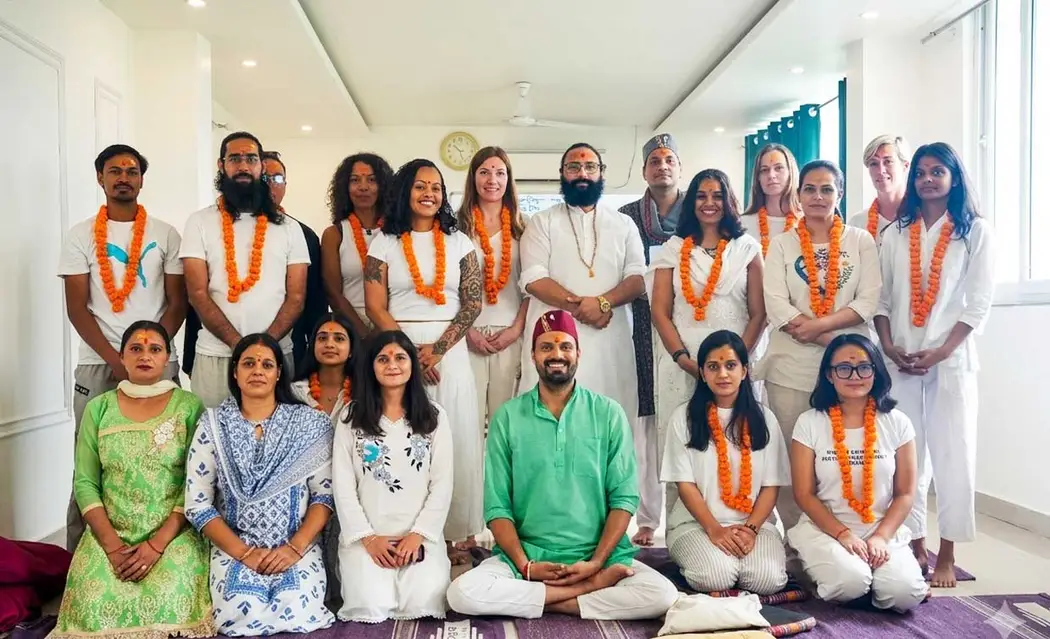
Students in a morning asana class during yoga teacher training at Arogya Yoga School, Rishikesh
Indian Standard Time · UTC+5:30
A day inside the ashram

Yoga Teacher Training Daily Schedule in Rishikesh

What your day actually looks like at Arogya Yoga School: an early start, two long practices, two hours of theory, quiet study time after lunch and an early night. Here is every hour, and the reason behind it.

See the timetable
Day starts5:30 AM
Classes7 every day
Meals3 sattvic meals
Lights off9:00 PM
At a glance

The training day in short

In short: A teacher training day at Arogya Yoga School in Rishikesh runs from a 5:30 AM wake-up to lights off at 9:00 PM (Indian Standard Time). It holds seven classes: nasal cleansing, a morning pranayama, mantra and asana practice, meditation or Ayurveda, yoga philosophy, anatomy, alignment and an evening asana practice. Breakfast, lunch and dinner are vegetarian and sattvic, and the hours after lunch are kept for self-study. Updated

Wake-up
5:30 AM, with herbal tea
First class
6:00 AM, nasal cleansing
Practice time
About 5½ hours a day
Theory classes
Philosophy and anatomy, 10 AM to noon
Self-study
1:00 to 3:00 PM, library or rest
Meals
9 AM, 12 noon and 7 PM
Lights off
9:00 PM
Attendance
Every class is compulsory for certification
Live in Rishikesh

Yoga teacher training timetable

The clock shows the time in Rishikesh right now and highlights the class that is running. Below it, the same timetable is written out as a simple table you can save or print.

A day at Arogya · Rishikesh
--:--:----IST

Indian Standard Time · UTC +05:30


Now in Rishikesh--
--

--

  • Practice
  • Study
  • Sattvic meal
  • Rest
  1. MorningBrahma muhurta to noon

    1. Wake up

      5:30 AM IST
      Rest
    2. Herbal tea

      5:30 – 6:00 AM IST
      Herbal tea
    3. Nasal cleansing

      6:00 – 6:30 AM IST
      Practice
    4. Pranayama, Mantra chanting & Asana

      6:30 – 8:00 AM IST
      Practice
    5. Meditation / Ayurveda

      8:00 – 9:00 AM IST
      Practice
    6. Breakfast

      9:00 – 10:00 AM IST
      Sattvic meal
    7. Yoga Philosophy

      10:00 – 11:00 AM IST
      Study
    8. Yoga Anatomy

      11:00 AM – 12:00 PM IST
      Study
  2. AfternoonNourish, study, refine

    1. Lunch

      12:00 – 1:00 PM IST
      Sattvic meal
    2. Library / Self-study

      1:00 – 3:00 PM IST
      Study
    3. Yoga Alignment

      3:00 – 4:00 PM IST
      Practice
    4. Yoga Asana

      4:00 – 5:30 PM IST
      Practice
  3. EveningDine, unwind, rest early

    1. Dinner

      7:00 – 8:00 PM IST
      Sattvic meal
    2. Lights off

      9:00 PM IST
      Rest
7Classes every day
3Sattvic meals
9PMLights off

Note: In the process of evaluation and certification, discipline is a key factor. Attending all classes is mandatory. If a leave is required in case of emergency, consult the respective faculty prior to the class.

Daily schedule of yoga teacher training at Arogya Yoga School, Rishikesh (Indian Standard Time)
Time (IST)SessionType
5:30 AMWake upRest
5:30 – 6:00 AMHerbal teaTea
6:00 – 6:30 AMNasal cleansing (neti)Practice
6:30 – 8:00 AMPranayama, mantra chanting and asanaPractice
8:00 – 9:00 AMMeditation or AyurvedaPractice
9:00 – 10:00 AMBreakfastMeal
10:00 – 11:00 AMYoga philosophyStudy
11:00 AM – 12:00 PMYoga anatomyStudy
12:00 – 1:00 PMLunchMeal
1:00 – 3:00 PMLibrary and self-studyStudy
3:00 – 4:00 PMYoga alignmentPractice
4:00 – 5:30 PMYoga asanaPractice
5:30 – 7:00 PMFree timeRest
7:00 – 8:00 PMDinnerMeal
9:00 PMLights offRest
Hour by hour

What happens in each session

A timetable tells you when. This part tells you what you will actually be doing, so nothing on your first morning comes as a surprise.

Wake up, then herbal tea

The ashram is still dark and very quiet. You get half an hour to wash, sit with a cup of warm herbal tea and let the body wake up slowly. There is no food yet. Practising on an empty stomach is easier, and you will notice the difference by the second day.

Nasal cleansing

The first class is a cleansing practice, usually jala neti: rinsing the nose with lukewarm salt water from a small pot. It sounds strange and feels strange the first time. A teacher shows you each step, and most students are doing it on their own within a few days. Clear nostrils make the pranayama that follows noticeably easier.

Pranayama, mantra chanting and asana

The longest practice of the morning. It opens with breathing exercises and a short mantra, which settles the group, then moves into a full asana class in the Hatha and Ashtanga Vinyasa styles, including Surya Namaskar. Early in the course the pace is gentle. It builds as your body adapts.

Meditation or Ayurveda

After moving, you sit. This hour is given either to guided meditation (preparation, posture, mudras, japa and how to handle a restless mind) or to Ayurveda, the traditional Indian system of health that sits alongside yoga. Both are taught in a practical way you can carry home.

Breakfast

The first meal comes after three hours of practice, and it is welcome. Like every meal here it is vegetarian and sattvic: fresh, simple and light enough that you can sit in a lecture straight afterwards without feeling heavy.

Yoga philosophy

Philosophy classes are built around the Yoga Sutras of Patanjali, along with the origins of yoga, its different paths, the eight limbs and the five koshas. It is a discussion more than a lecture. Each Friday, students lead the conversation on that week's reading, which is a good first taste of standing in front of a group.

Yoga anatomy

Here you learn how the body really moves: bones, joints, muscles, posture and the breathing and digestive systems. The aim is practical. You should be able to look at a student in a pose and understand what is happening, and what might hurt them.

Lunch

The main meal of the day, eaten together in the dining area. It is also when the group gets to know each other, because the morning is mostly spent in silence or in class.

Library and self-study

Two unscheduled hours. Some students read in the yoga library, some review their notes or practise teaching on a classmate, and some simply sleep. Use it well. By the second week, this is where the course material starts to come together.

Yoga alignment

A slower, closer look at individual postures. You break poses down, use props, practise hands-on adjustments and learn the verbal cues a teacher gives. This class is where you start thinking like a teacher, not only like a student.

Yoga asana

The second full practice of the day. By late afternoon the body is warm and more open than at dawn, so this session often goes a little deeper. As the course moves on, students also take turns leading parts of the class.

Free time

Your own time until dinner. Many students walk down to the Ganga, rest, do laundry or call home. After a full day, an hour and a half to yourself matters more than it sounds.

Dinner and lights off

Dinner is lighter than lunch, so that sleep comes easily. After that the ashram winds down and lights go off at 9:00 PM. With a 5:30 AM start, most people are glad of the early night after the first couple of days.

Attendance: discipline is part of how students are assessed for certification, so every class is compulsory. If an emergency means you have to miss one, speak to that teacher before the class.

The thinking behind it

Why the day is shaped this way

None of the timings are random. The schedule follows the way yoga has traditionally been taught in Rishikesh, adjusted for a modern teacher training.

Practice before breakfast

Early morning, known in yoga as brahma muhurta, is the calmest part of the day. The air is cool, the mind is not yet busy, and an empty stomach makes twists, forward bends and breathing work far more comfortable.

Theory when the mind is fresh

Philosophy and anatomy sit in the late morning, after practice and breakfast, when concentration is at its best. Heavy subjects are never placed straight after lunch.

Rest in the hottest hours

Early afternoon is kept for study and rest. It gives the body time to recover between the two physical sessions and gives you space to absorb what you learned that morning.

An early night

Lights off at 9 PM is what makes the 5:30 AM start possible. Over a few weeks, the regular sleep and meal times are often the change students notice most in themselves.

From our teachers

How to get through your first week

The first three or four days are the hardest. These small habits make them a lot easier.

Before you arrive

  • Start going to bed and waking up an hour earlier a week before the course.
  • Arrive a day or two early if you are flying in, so jet lag is gone before day one.
  • Pack warm layers if you come between November and February. Mornings in Rishikesh are cold.

Once the course starts

  • Drink water through the day. Every room has a kettle and a copper water bottle.
  • Keep dinner light and screens off after it. Sleep is your recovery.
  • Write things down. A notebook from the self-study hours is worth more than any manual.
  • Tell your teacher about any injury on the first day, not when it starts to hurt.
Live this schedule

Courses that follow this daily routine

Our Yoga Alliance teacher trainings in Rishikesh share this daily rhythm. What changes from course to course is the depth of each subject.

Ready to wake up at 5:30 in Rishikesh? Batches start on the 2nd of every month.

FAQ

Daily schedule questions

What time does yoga teacher training start each day?

You wake up at 5:30 AM and have herbal tea. The first class, nasal cleansing, starts at 6:00 AM, followed by pranayama, mantra chanting and asana from 6:30 to 8:00 AM. All times are Indian Standard Time.

How many hours of yoga do you practise a day?

Roughly five and a half hours of practice: nasal cleansing, the 90-minute morning class, an hour of meditation or Ayurveda, an hour of alignment and a 90-minute evening asana class. On top of that come two hours of theory and two hours of self-study.

Is the schedule too hard for a beginner?

No. The day is long, but the classes start gently and build up over the course. The early wake-up is usually the hardest part, and most students settle into it within three or four days. Our 100 hour course is designed for beginners.

Do I have any free time during the course?

Yes. The two hours after lunch are for self-study and rest, and you are free from 5:30 PM until dinner at 7:00 PM. Weekend excursions are also included in the course fee.

What are the meal times?

Breakfast is at 9:00 AM, lunch at 12:00 noon and dinner at 7:00 PM. All three meals are vegetarian and sattvic, and they are included in the course fee along with herbal tea in the morning.

Can I miss a class?

Attendance at every class is compulsory, because discipline is part of how students are assessed for certification. In a real emergency, speak to the teacher of that class beforehand.

What time is lights off?

Lights go off at 9:00 PM, so you get a full night's sleep before the 5:30 AM start.

Is the daily schedule the same in the 100, 200 and 300 hour courses?

The daily rhythm is the same: early practice, theory in the late morning, self-study after lunch, evening practice and an early night. The content of each class changes with the level of the course.