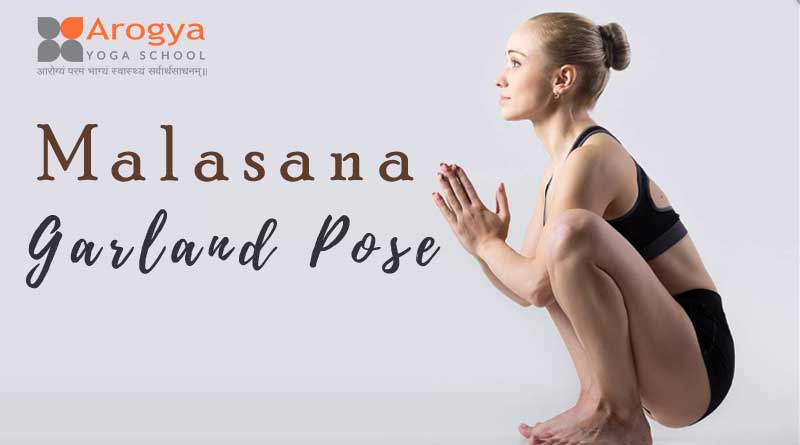
The Malasana or Garland Pose in Sanskrit (mala means garland, asana means stance), is a deep squat. It grounds your energy and opens the hips and lower body. Traditionally the arms encircle the torso like a necklace or garland.
Garland Pose, also called “Wide Squat” (Malasana), is a preparatory pose for Crow Pose (Bakasana). Most yoga teachers call Malasana “Frog Pose.”
Table of Contents
Do not confuse it with the kneeling hip-opening pose, also called “Frog Pose.”
Garland Pose Sanskrit name “Malasana” (mah-LAHS-uh-nuh) comes from two words:
- Mal — meaning “garland”
- Asana — meaning “pose”
Key overview and focus
Malasana helps restore a normal range of motion in the hips, ankles, and pelvis. It also helps reduce stiffness caused by long periods of sitting.
- Sanskrit Name: Malasana (मालासन)
- Pose Type: Deep Hip Opener/Grounding Squat
- MUSCLES WORKED Glutes, pelvic floor, quadriceps and deep core.
- Primary Areas Stretched: Groin, inner thighs, hips, Achilles tendons, calves, and lower back.
Foundation and alignment fundamentals
Foot Position: Feet slightly wider than hip width apart, toes turned out 45 degrees.
Sink down: Deeply bend knees, sink hips down into deep squat. Keep your heels on the mat (or propped on a rolled-up blanket if they lift).
Upper body engagement: Bring palms together at heart center to Anjali Mudra (prayer pose). Lightly press elbows against the inside of your knees to encourage the hips open while lifting the chest up away from the pelvis.
Neck & Spine: Lengthen the back of the neck, relax the shoulders down away from the ears, and soften the gaze directly ahead.
Step-by-Step Entry
The best way to enter Malasana is to build a good foundation before dropping into your hips. A clear step-by-step entry protects the knees and keeps the lower back long.
1. Assume your stance: Variation of Mountain Pose.
Stand at the middle of your mat, with your feet wider than your hips. Turn your toes out so they are about 45 degrees so your knees track over your middle toes.
2.Squat down: Exhale
Bring your palms together at your heart in prayer position (Anjali Mudra).
Exhale and slowly bend your knees.
Lower your hips straight down to the floor into a deep squat. Extend your arms and lengthen the spine: Participation.Open your knees wider than your hips. Place your upper arms or elbows against the inside of your inner knees. Press your palms together firmly to widen your collarbones and lift your chest away from your belly.
4. Refine and breathe:
Hold for 5–10 breaths.Press down through all four corners of each foot. Shoulders down away from ears, lengthen neck. Inhale to lift through the crown of your head, exhale to let your tailbone root toward the earth.
5.Safe Exit: Breath in to transition.
To stand up, press hard into your feet. Brace your core. Straighten your legs to stand. Or, place your hands behind you and sit down on your mat.
Pro Tips for Correct Alignment
If your heels lift: Place a rolled up yoga mat or blanket underneath your heels so you have a solid surface to ground into.
If your back rounds Sit your hips on a yoga block (set on low or medium height) to relieve pressure on your lower back and groin.
Knee protection: Your knees should always be going in the same direction as your toes. They should never cave in.
Malasana benefits
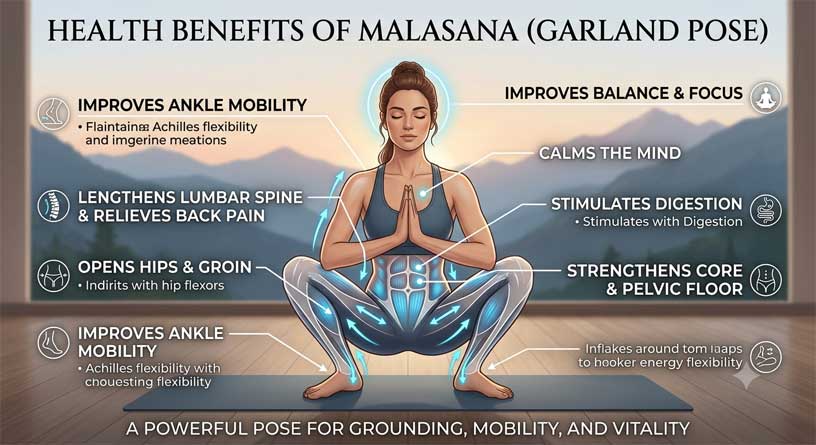
Malasana or the Garland Pose is one of the most powerful functional postures in Yoga. It brings the body into a deep, grounded squat. It targets the areas most tightened by our modern sedentary lifestyle: hips, lower back, and ankles.
1. Powerful Hip Opener & Mobility Booster Opens the inner thighs and groin. Stretches the adductors and loosens the hips to ease tension.
Improves ankle flexibility: Keep Achilles tendons and calves flexible. This builds knee stability and increases dorsiflexion (bending the foot upward).
2. Postural Correction & Spinal Decompression
Lumbar Spine Lengthening: Gravity pulls the pelvis down. An active lift of the heart creates space between the lower vertebrae. This reduces tension in the lumbar spine.
Strengthens the upper back. Pushing your elbows into your knees activates the rhomboids and upper back muscles. This helps prevent hunching forward.
3. Digestive & abdominal support
Promotes digestion. By gently squeezing the lower belly, it massages and stimulates internal organs. This helps support regular bowel movements.
Balances Apana Vayu: Malasana helps reduce bloating, gas, and slow digestion. It releases trapped downward-moving air in Ayurvedic anatomy.
4. Pelvic Floor and Reproductive Health Tones the Pelvic Floor – It tones and stretches the pelvic floor muscles at the same time. It also improves healthy blood flow to the pelvic organs.
Eases Menstrual Discomfort: When done gently and with support, it can ease cramps and pelvic heaviness during menstruation.
5. Stress Reduction & Mental Grounding – This move slows your heart rate and calms your nervous system. It does this by bringing your hips close to the ground. Good for grounding erratic energies after long chaotic days Relieves Nervous Tension
Malasana Garland pose Preparatory Poses
- Baddha Konasana
- Upavistha Konasana
- Virasana
Malasana Garland pose Follow-up Poses
- Uttanasana
- Adho Mukha Svanasana
- Bhujangasana
Other Information of garland pose – Malasana
Strengthens: Lower back, Hips, Digestive system
Yoga Pose Level: Basic
Yoga Style: Hatha Yoga
Yoga Pose Duration: 60 seconds
Repetition: None
Sanskrit Name : Malasana
English Name : Garland Pose
Stretches: Thighs, Hamstrings, Groin, Lower back
Other Health Benefits of Garland Pose – Malasana:
- Opens your hips and groin
- Instigates metabolism.
- Malasana also increases blood circulation
- Malasana stretches the thighs, groin, hips, ankles, and torso.
- Stretches your ankles, lower hamstrings, back and neck
- Tones your abdominals
- Malasana is particularly beneficial for women who are pregnant
- Aids in digestion
- Help to concentration, and focus
- Malasana improves balanc
- Strengthens your metabolism
- Keeps your pelvic and hip joints healthy
- Ideal for prenatal yoga
- help regulate sexual energy
- tones the belly.
- improves the Yoga posture.
- flexibility in your ankles and knees.

About the Author